Queue Management System in Saudi Arabia: A 2026 Guide for Banks and Clinics
Long lines quietly cost businesses more than they realise. In 2026, a modern queue management system in Saudi Arabia has moved from a “nice to have” to a core part of how banks, hospitals, and government offices serve people. When customers wait without clarity, satisfaction drops fast. When they wait with structure, information, and a fair order, the same wait feels effortless.
This guide explains how smart queuing works, why it fits the Kingdom’s digital priorities, and how to roll it out without overcomplicating your front desk. We will keep it practical, because the goal is shorter perceived waits and happier visitors, not shiny dashboards nobody reads.
Why a Queue Management System in Saudi Arabia Matters Now
Saudi Arabia is investing heavily in service quality as part of its national transformation goals. The official Saudi Vision 2030 program explicitly targets faster, more citizen-friendly public services. Queuing is one of the most visible touchpoints in that journey, so it directly shapes how modern a bank branch or clinic feels.
There is also a hard business case. Research summarised by the U.S. National Library of Medicine consistently links shorter, better-communicated wait times to higher patient satisfaction and better follow-through. The same logic applies to retail and finance: predictable waits build trust.
The real cost of a messy line
- Walk-aways: visitors leave before being served and may not return.
- Staff stress: teams juggle crowd control instead of helping customers.
- No data: managers cannot see peak hours, so staffing stays guesswork.
- Unfair order: “who was next?” disputes damage the brand in seconds.
How a Modern Queuing System Actually Works
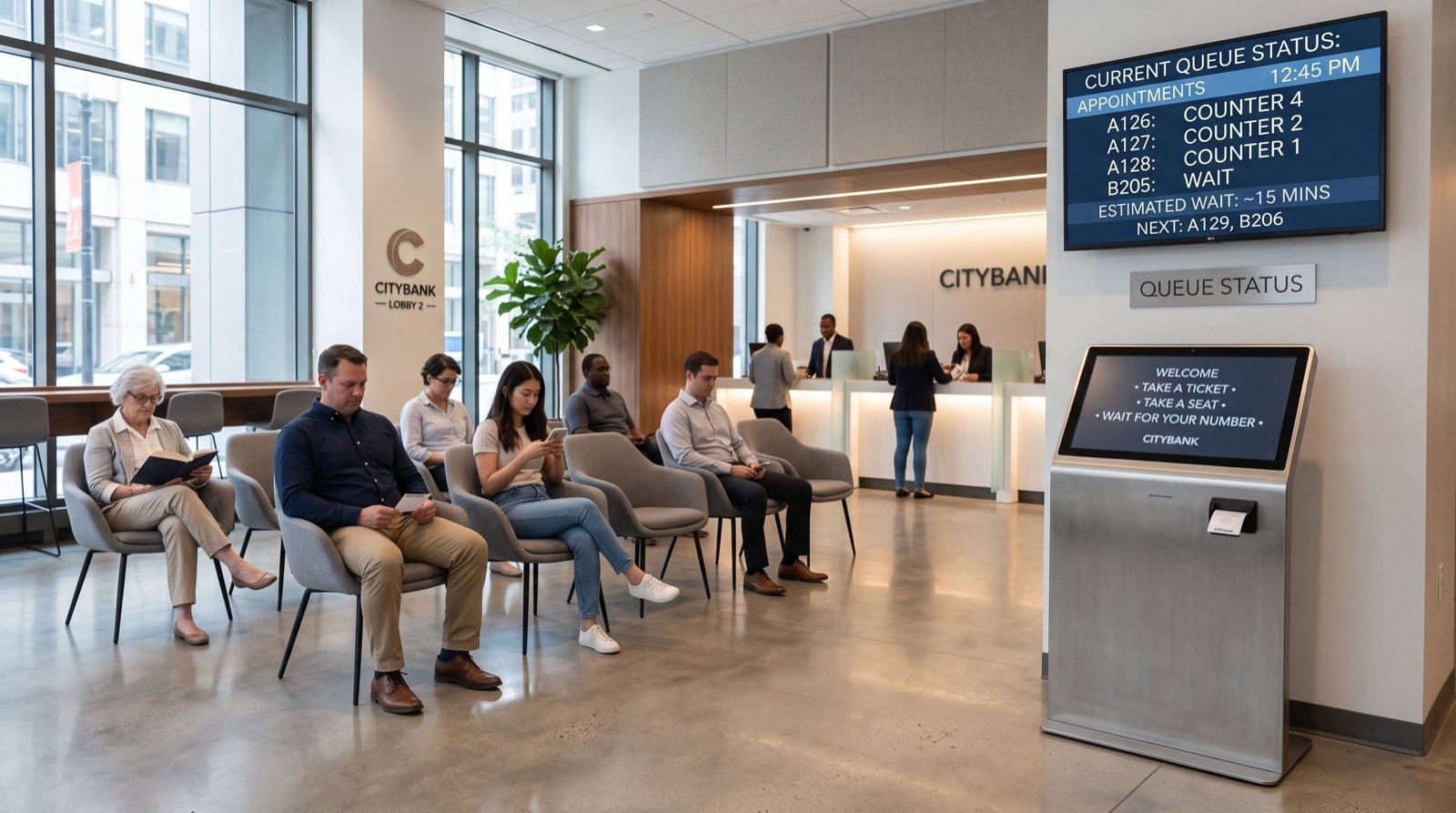
A digital queue replaces the paper ticket and the shouted name with a connected flow. A visitor checks in, receives a position, and watches progress on a screen or phone. Staff call the next person with one tap. Everything is logged, so managers finally get numbers to act on.
- Check-in: kiosk, QR code, or reception tablet captures the service type.
- Routing: the system sends each visitor to the right counter or specialist.
- Notification: SMS or a live display keeps people informed and relaxed.
- Service: agents handle the request while wait data records silently.
- Feedback: a quick rating closes the loop and flags weak spots.
For organisations ready to upgrade their branches, a purpose-built queue management system in saudi arabia ties these steps together with Arabic-first interfaces and local support, which matters far more than most buyers expect.
Where the right headset fits in
Queuing is only half the experience. Once a customer reaches the counter, call clarity decides whether the interaction feels professional. A noise-cancelling unit such as the Addasound Crystal 2731 helps agents hear clearly in busy halls, which cuts repeat questions and speeds up each visit. Pairing good queuing with good audio is an underrated combo.
On-Premise vs Cloud: Which Deployment Suits You?
| Factor | On-Premise | Cloud-Based |
|---|---|---|
| Setup speed | Slower, needs local servers | Fast, remote provisioning |
| Upfront cost | Higher hardware spend | Lower, subscription model |
| Data control | Fully in-house | Hosted, with compliance options |
| Multi-branch view | Harder to centralise | Unified dashboard |
| Best for | Strict data policies | Growing branch networks |
Many Saudi banks choose a hybrid: sensitive data stays local, while reporting lives in the cloud for a single national view. Choose based on your compliance rules first, then convenience.
What Should You Look For Before Buying?
This is the question most decision-makers skip, then regret. Use this checklist when you compare vendors and demos.
- Arabic and English UI: full right-to-left support, not a patch.
- Appointment booking: let customers reserve slots and skip the hall.
- Live analytics: wait time, service time, and no-show rates by branch.
- Integration: connects to your CRM, core banking, or hospital system.
- Hardware support: kiosks, displays, and headsets from one partner.
- Local service: on-ground help in the Kingdom, not only email tickets.
One original tip from the field: run a two-week baseline with your current line before installing anything. Measure average wait manually. That single number turns your eventual report into a before-and-after story leadership can act on, and it is the kind of evidence dependable specialists rely on when they prove value to clients.
A quick rollout plan
- Pilot one busy branch for 30 days.
- Train staff on the one-tap “next” workflow.
- Place a clear display where the queue forms.
- Review analytics weekly and adjust staffing to peaks.
- Scale to remaining branches with the proven template.
Measuring the Return on Investment
Leadership rarely approves technology on good feelings alone, so frame queuing as a measurable investment. The returns show up across three clear areas, and each is easy to track once the system is live.
First, revenue retention. Every customer who abandons a line is lost income, and digital queuing slashes walk-aways by keeping people informed and free to wait comfortably. Second, labour efficiency. When routing and analytics tell you exactly when demand peaks, you schedule staff to match reality instead of overstaffing quiet hours and drowning during rushes. Third, compliance and reporting. Many Saudi regulators now expect service-level evidence, and a digital queue produces that audit trail automatically.
A concrete example helps. Suppose a mid-size branch loses ten walk-aways a day, each worth a modest average transaction. Over a year that is thousands of lost interactions, far more than the cost of the system. When you present the math this way, approval becomes a formality rather than a fight.
Keeping the system healthy over time
- Review analytics monthly, not just at launch, so improvements compound.
- Refresh staff training whenever new team members join a counter.
- Update service categories as your offerings change through the year.
- Keep hardware firmware current to avoid avoidable downtime.
Frequently Asked Questions
How much does a queue management system in Saudi Arabia cost?
Pricing depends on the number of branches, counters, and whether you add kiosks, displays, and appointment booking. Cloud plans lower the upfront cost, while on-premise setups cost more initially but give full data control. Always request a per-branch quote tied to your real visitor volume.
Can it handle Arabic and support walk-ins and appointments together?
Yes. A well-built system offers full Arabic right-to-left interfaces and blends scheduled appointments with walk-in tickets in one fair queue, so no customer type is pushed aside.
How long does installation take?
A single-branch pilot can go live within days on a cloud plan. Multi-branch rollouts usually run over a few weeks, mostly spent on staff training and integration rather than the software itself.
Will it integrate with our existing systems?
Reputable vendors provide APIs to connect with CRM, core banking, or hospital records. Confirm integration during the demo and ask for a reference client in your sector.
The Bottom Line
A thoughtful queue management system in Saudi Arabia does more than organise a line. It gives customers clarity, gives staff calm, and gives managers the data to keep improving. Pair it with reliable counter audio and a simple rollout plan, and even your busiest branch can feel welcoming in 2026. Start with one pilot, measure honestly, and let the results make the case for scaling across the Kingdom.